Anatomically Correct

Since I interviewed Louise of Faux Taxidermy Knits and wrote about her interesting new book earlier this week, I thought I'd continue on with the theme of animals and preservation today. I've seen some of these before and the part of me that always found dissection educational and was interested to see what's inside and how things work (who knew there was so much happening in earth worms and frogs?) cheered at this unique idea. The part of me that found it just a little bit gross (I can still smell the formaldehyde coming from the Earth Science room in junior high) and mourned the loss of life so I could study someone's insides is glad to see these knitted up and not in a jar waiting to be sliced open...

Original article here.

---------

Learn Anatomy From Dissected Knit Creatures By Emily Stoneking

I can’t say I ever expected to see anyone make animal dissection cute, but knitting artist Emily Stoneking has done it. Her aKNITomy artwork faithfully recreates typical high school dissection projects as arguably cute knit panels.

If you have a visceral or ethical problem with animal dissection, Stoneking’s artwork also can potentially help you learn about what makes animals tick without making you hurl or cry. If your memories of those high school classes are less than fond, she also has alien knit dissections as well.

Stoneking sells these knitted animals dissections on her aKNITomy Etsy shop, where she has a load of other educational knit projects as well. Take a look!

Emily Stoneking’s knit animal anatomy pieces can be found on her aKNITomy Etsy shop!

Faux Taxidermy Knits

I love when people do interesting things with knitting! When I heard about Louise Walker's new book, Faux Taxidermy Knits, I was instantly intrigued. My grandfather had taxidermied pheasants in his basement, and while they creeped my out a little, I always found them fascinating. Knitted taxidermy? Crazy cool! Louise was kind enough to answer a few questions about her new book all the way from the UK...

POD.pdf

Tanis Gray (TG): This is a wonderfully creative idea - a book full of knit faux taxidermy! How did it come about? 

Louise Walker (LW): For me, the faux taxidermy started when I was a student. Whilst studying commercial photography I began crafting my own props for my shoots. The first one being a hunting editorial where I replaced all the trophy heads and stoles with knitted versions. After graduating I was approached by Boden and a few knitting magazines to work on faux taxidermy pieces after seeing the photos I'd made at university. I was selling finished pieces alongside designing for the magazines and when approached by my publishers, how could I saw no to writing a whole book of faux critters.

TG: Any interest in becoming an actual taxidermist?

LW: I love taxidermy, but from afar! I'm in awe of the artists who have used it in the work, such as Walter Potter, but don't think I could do it myself.

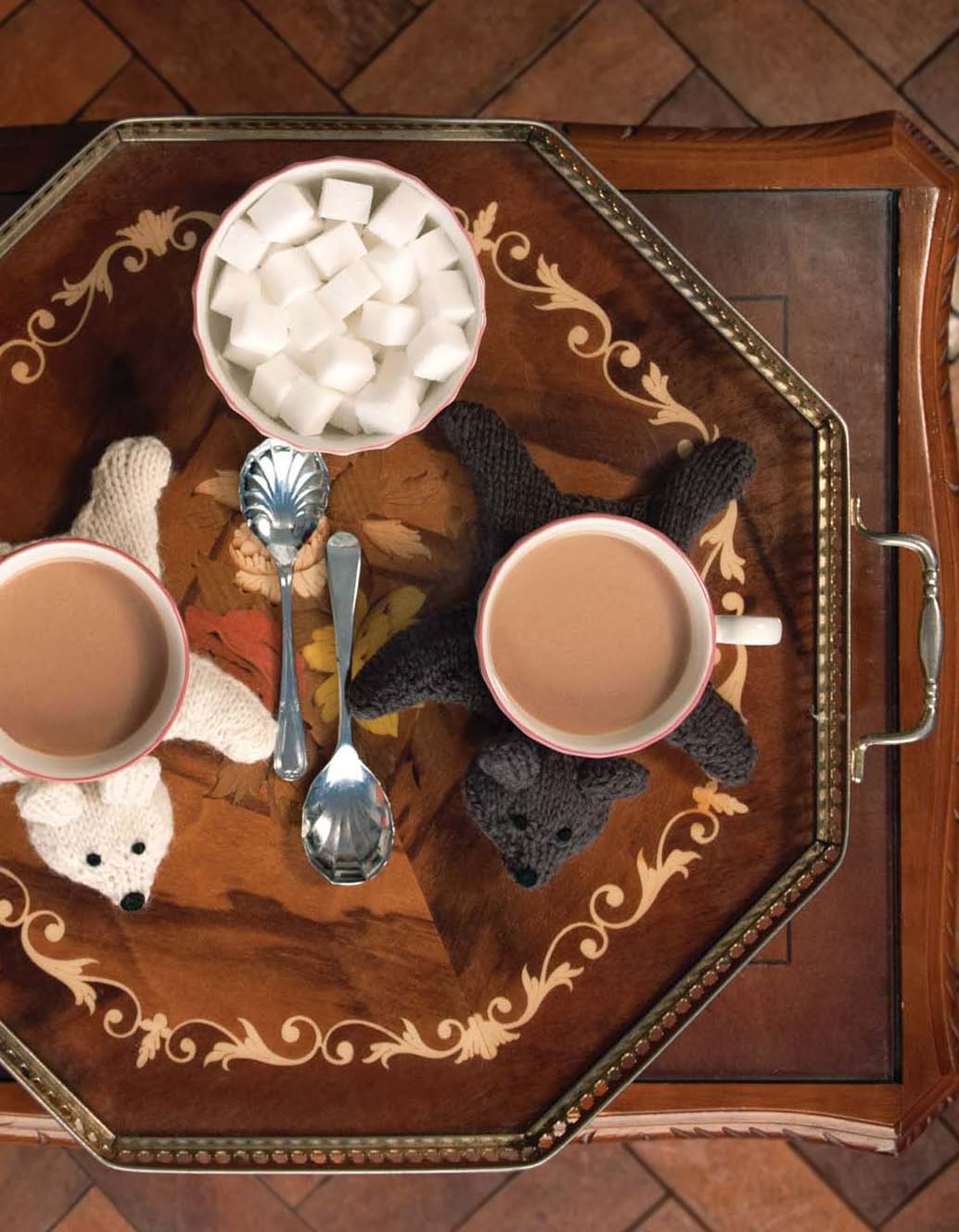
Faux Taxidermy Knits - Bear Coasters beauty image

TG: You’re a photographer who fell into knitting by chance. How have you married the two?

LW: I think being in education and solely studying photography for five years gives me a different approach as a designer. Maybe I see things a little differently as I'm always planning for the final stage of the design and how its going to be presented. It's a great skill to have as it means I can knit a design and once it's finished work on the photographic side. I don't think I use my photographers background as much as I should but hope to expand on it as the business grows.

Faux Taxidermy Knits - Mole Door Stop beauty image

TG: You used some of your own hand dyed yarn in your book. How was that process and would you do it again?

LW: I liked the process of hand dying but it's just finding the time amongst everything else to expand the range. In the future I'd like to have a set of patterns designed in my own yarn so thought the book would be a great place to start. I found it really interesting and frustrating finding the perfect colours and would love to do more. I might go and put a pot on now.

Faux Taxidermy Knits - Hedgehog Slippers beauty image

TG: You photographed your own book! Were you able to look at it with a photographer’s eye rather than a knitter’s? Was there anything particularly difficult about being responsible for the look of the book?

LW: I was able to look at the pieces from a photographers perspective, however as the designer I knew exactly how I wanted them to look. I think I would have been awful on the shoot if someone else had been taking the photos. I did have a lot of help with it, from an art director friend who made sure I was on the right track. I think the book needed to really focus on the pieces, so everything else needed to compliment them. The concepts naturally fell into place but it was the shooting of it that proved most difficult.

Faux Taxidermy Knits - Moose Head beauty image

TG: What’s your favorite project in the book (mine’s the moose head!)?

LW: My favourite might be the mole, but it does change from day-to-day. I'm really proud of the tiger as it took so long to design and put together. But there's something about the mole that just makes me smile. I recently brought a cross stitch of a mole that'll match my door stop perfectly.

TG: Did you have an idea for a project in the book that didn’t come to fruition due to time or impossibility?

LW: The mole was actually supposed to come in a set of three or four but after knitting him he looked so cute by himself. There were time restrictions which meant I'd left the extra moles until the end but I was so happy with him I wasn't worried about making them.

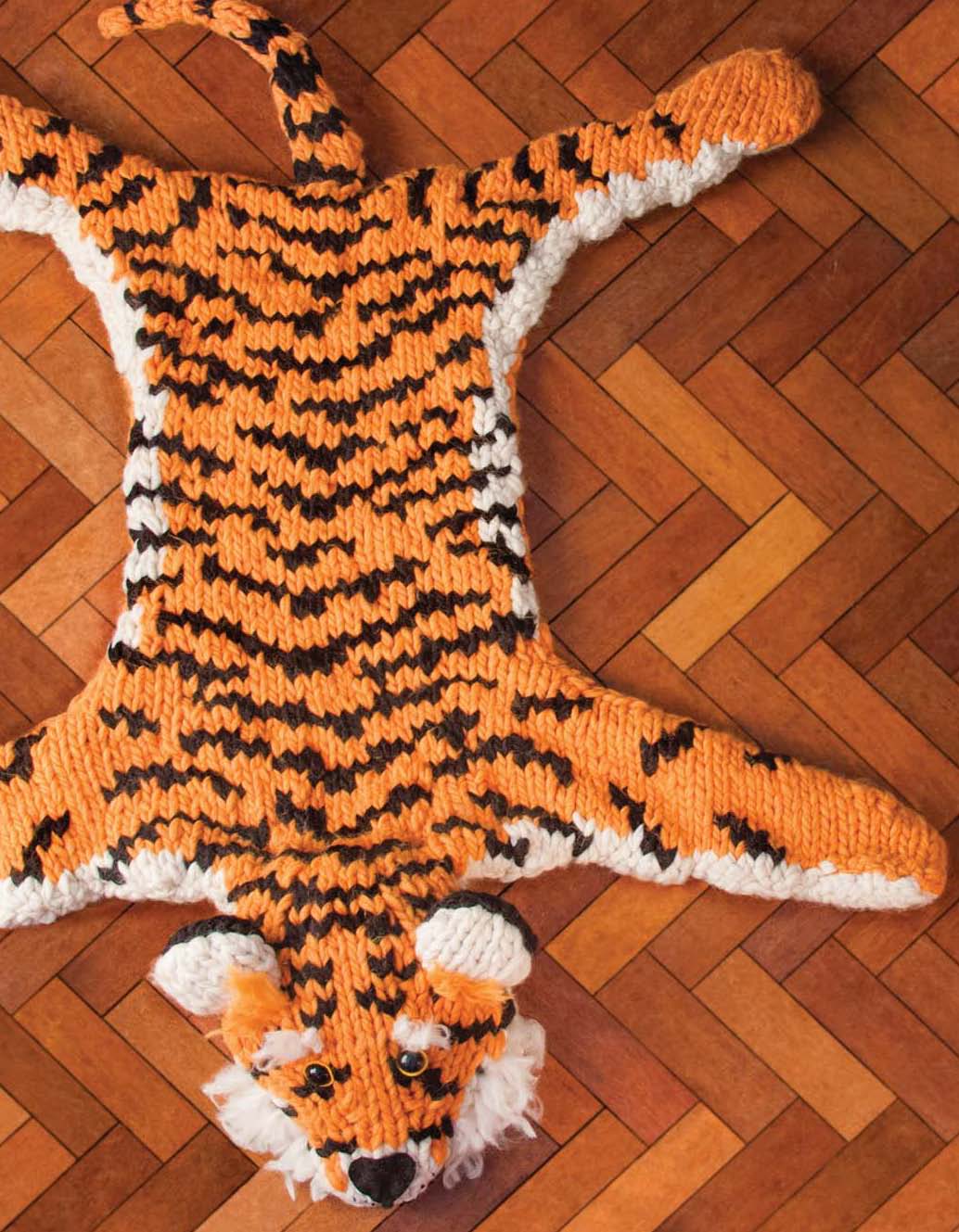
Faux Taxidermy Knits - Tiger Rug beauty image

TG: You sell some fantastic kits on your Etsy shop. What’s your best seller?

LW: My best seller is the fox kit, I usually make up a lot more of those to take to shows too as they are so popular. I've just launched some dinosaurs though and I think the triceratops is now giving Mr. Fox a run for his money.

TG: Any plans for another book?

LW: There might be, I've put in a hint that I'd like to do another so it might just be a case of finding some new inspiration.

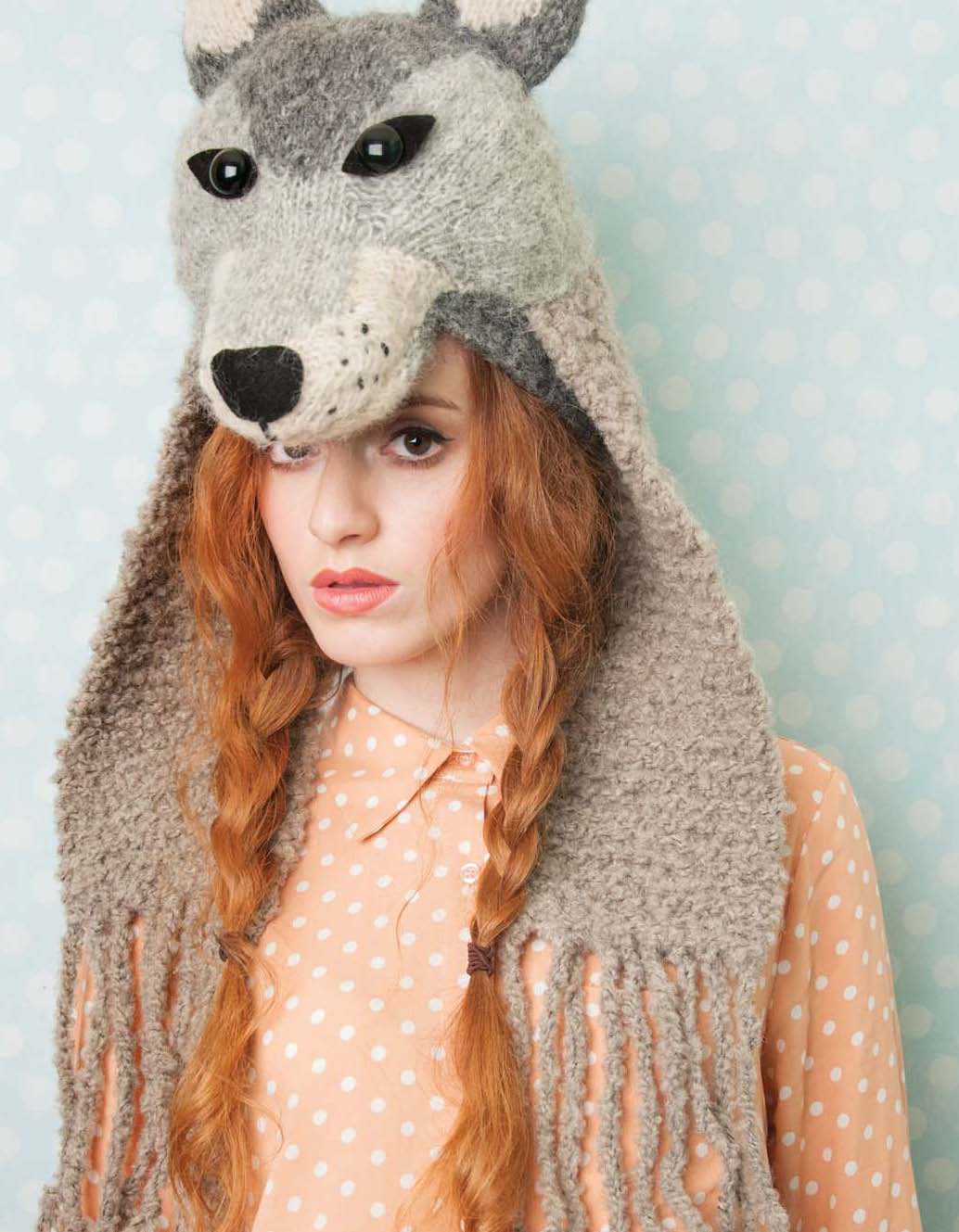
Faux Taxidermy Knits - Wolf Headdress beauty image

TG: What’s your favorite animal?

LW: As a child it was always an elephant, then as a teen a giraffe. Now I don't know, maybe a fox. Can I choose a Pokemon?

---------

Thanks, Louise! check out her new book here.

Bits & Bobs

As a child, I loved when my mother would let me play in her button stash. I'd stack, organize, make rainbow arches out of all the colors, spend hours sifting through the tiny world of color and texture that lived in her button box, then close the lid and look forward to the next time. 10338254_10203221675557679_7657168324951083996_n

All the women in my family have button boxes. I inherited my grandmother's, my mom gave me hers and I have built my own impressive stash that lives in an old letter press drawer. I ran across this post and spent longer than I should have staring at these wonderful images. It was the buttons that drew my attention first, but they are true works of art (of works of art)! Enjoy!

-----------------

Artist Uses Hundreds Of Found Objects To Recreate Iconic Paintings And Portraits

Source: bluebowerbird.co.uk | (via: mymodernmet)

In her “Plastic Classics” series, British artist Jane Perkins uses almost anything she can find – buttons, plastic toys, LEGO pieces, etc. – to re-create recognizable iconic paintings like DaVinci’s Mona Lisa and portraits of stars like Albert Einstein and Nelson Mandela. Although she has her artistic roots in textile work, she works almost exclusively with plastic parts.

Each portrait or “painting” she has created, when inspected close up, reveals a miniature textured world of forgotten knick-knacks, somewhat like an impressionist painting.

By creating her work from found objects, her works not only make a strong and important statement about our mass-consumption society, they also join a long line of other awesome artists we’ve covered on Bored Panda who have also created amazing works from found or recycled objects. Edouard Martinet’s amazing retro insect sculptures, Susan Beatrice’s elegant recycled watch part sculptures, and the amazing textile flora and fauna of Mr. Finch are all excellent examples of what an artist can do when they out their mind to reducing the amount of waste we create.

Talking "Knits for Boys" with Kate Oates

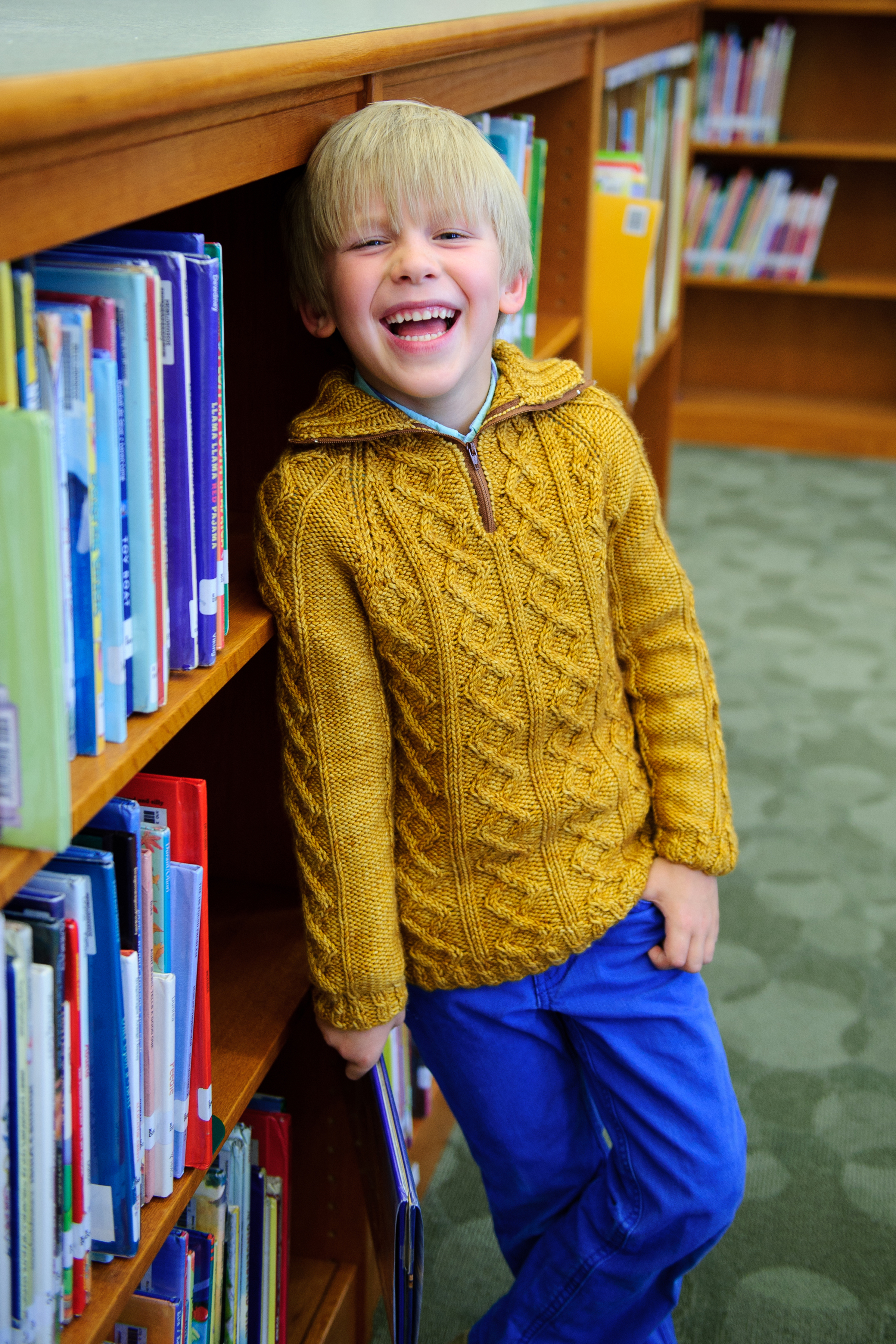
I got a chance to work with Kate Oates on my most recent book (coming this fall). Kate is the designer for Tot Toppers & When I Grow Up and the author of a new book, Knits for Boys and before that Knitting Clothes Kids Love.  She enjoys designing hats and garments for babies and children in particular, these projects often reflect a whimsical spirit. In her non-knitting life, Kate holds a PhD in Political Science from the University of Florida and lives with her family in South Carolina, which includes husband Ryan, boys Jesse, Charlie, Oliver & Eliot. She has so many super cute patterns on her Ravelry profile here!

Kate was kind enough to sit down and talk with us about her new book, Knits for Boys!

Adobe Photoshop PDF

Tanis Gray (TG): There are a lot of knitting books for kids out there, but as the mom of a boy, I find there aren’t an overwhelming amount of functional, modern, cute sweaters for boys. I was so happy to read through your book and see how many great designs for little men there are in there! How did the idea for this book come about?

Kate Oates (KO): I have four boys! I started off doing mostly baby design, but as mine have aged I couldn't help but start sizing more broadly.  Really, it is kind of lucky for me that there is a need for more patterns in this area because I probably would have done it anyway.

12

TG: You are not afraid of color or texture! How did that influence your collection of designs for your latest book?

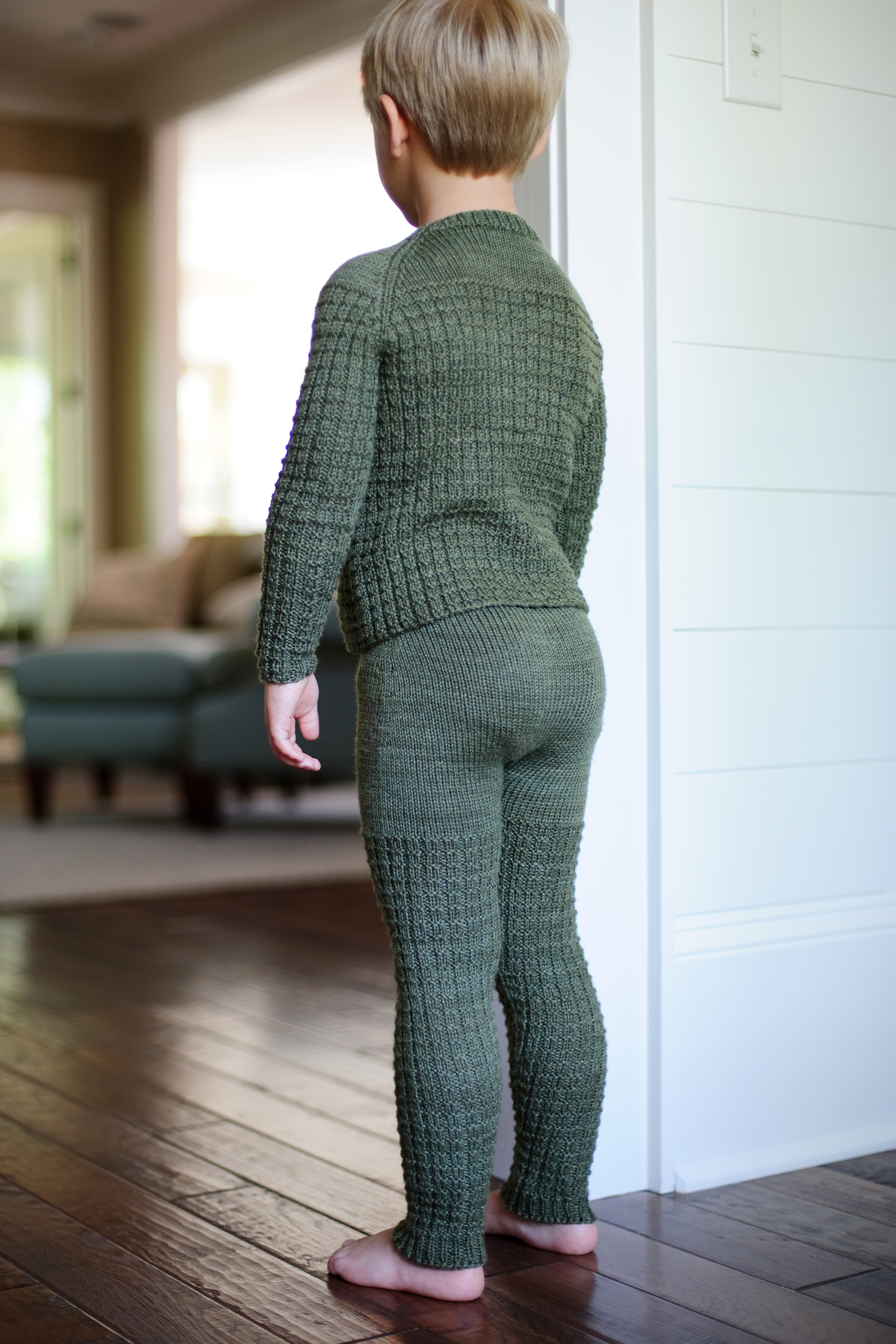
KO: No, I'm not.  I love love love color! My parents used to joke about me talking about "pretty colors" growing up as a kid. That has definitely stayed with me.  I really enjoy knitting things that I find interesting to look at and to touch (hence my texture obsession).  Fortunately for me, my kids either inherited a love for color and texture from me, or else I have taught them well.  There is very little neutral in any of our wardrobes.

42

TG: Something particularly great about this book is your “Grow With Me Tips and Tricks.” This is an idea that knitting moms or anyone knitting for children will really appreciate. Tell us more about that.

KO: Grow-With-Me came from my hearing knitter's lamenting on how much time they labor over a project for the child to wear it once or twice and then outgrow it.  I also am NOT a fan of the knit-it-4-sizes-too-big-and-they-will-grow-into-it approach.  So, I started experimenting with techniques to extend the fit and longevity of a sweater in ways that made it wearable and attractive no matter what phase.  Of course kids are still going to outgrow things--but using some Grow-with-me will definitely help to extend the fit!

083

TG: I appreciated the very clear schematics and photo tutorials. Why was it important to you to include those in your book?

KO: In order to really take advantage of Grow-With-Me, schematics are a must!  I have always provided schematics in my patterns. Although it is usually easier to fit a child into a standard size than an adult, there are plenty of occasions where knowing that you have a long and skinny or a shorter muscular frame mean that you can tailor the fit for the child. I'm a very visual person so photo tutorials were also a must! Finishing skills can really make or break a knit, and I wanted to provide all the tools for knitters to be successful.

52

TG: The Jesse Half-Zip and Imagination Sweater are tied for me as my favorites. What’s your favorite design in this book and why?

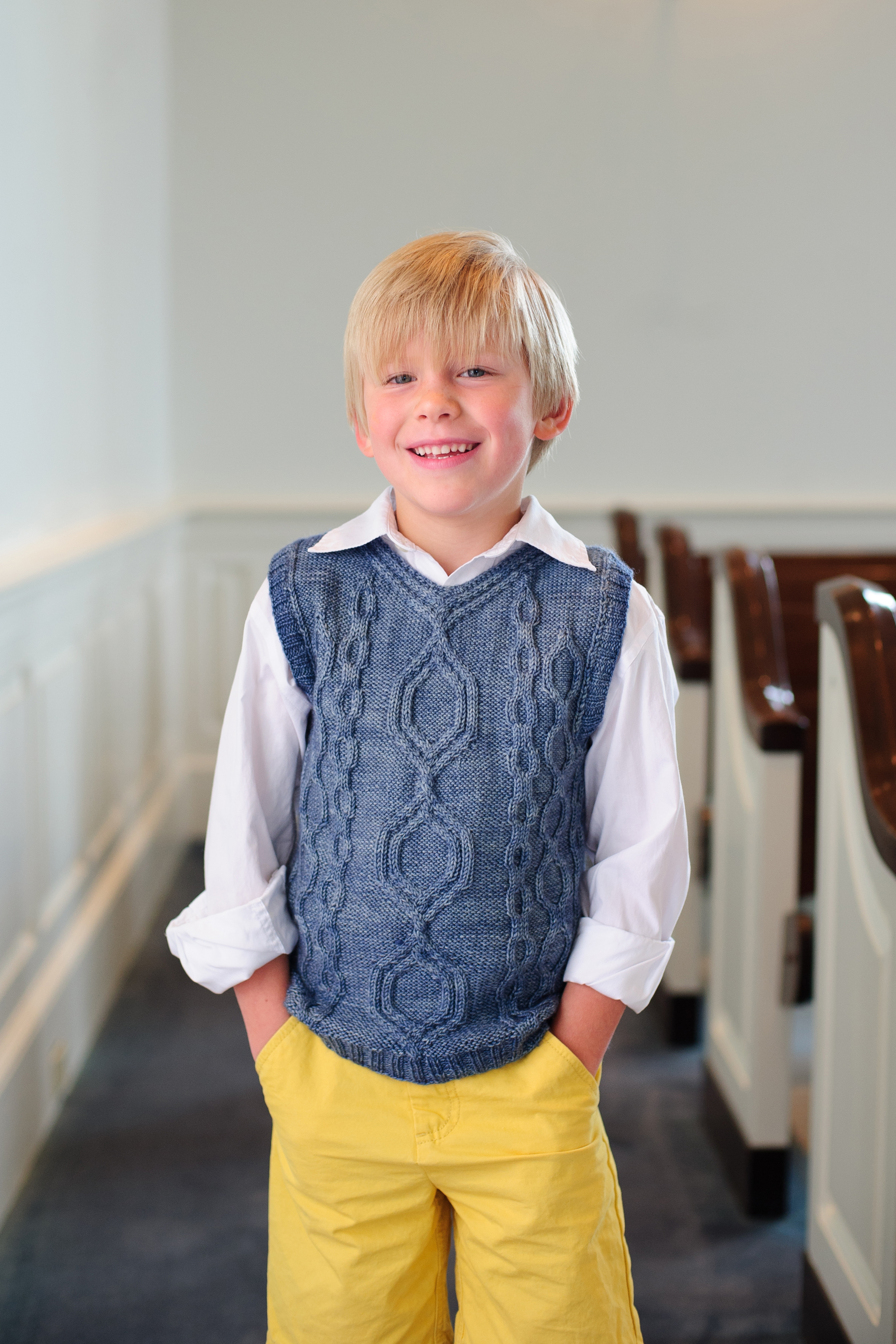
KO: Ha!  You have great taste.  Those two are in the top for me as well.  I also love the Prepster Vest and T-Rex Pullover. But I have so many favorites...I truly love them all. I've already talked about my love for color and texture and so that probably explains my top choices.

61

TG: You have FOUR boys and they modeled for your book. How involved were they in the process? Did you run ideas by them or did they make suggestions?

KO: Yes absolutely!  My oldest was the inspiration for the T-Rex sweater, he has always been really into dinosaurs. The sections of the book sort of ended up being based on my older two boy's preferences.  I have one who loves color and one who loves texture and that's how I came up with that particular break down. They had a lot of fun at the photo shoots and we pretty much just let them do their thing, they came up with "poses" or things to do and we just chased them around.

SPP_5105

TG: Which project in the book was the most fun to knit? 

KO: The Imagination Sweater.  I pretty much came up with the stitch patterns while I was knitting it, so that was fun.  I go through phases where color work is my favorite thing to do, and then cabling is my favorite... It just so happened that I knit this book during a color work phase!

11

TG: Did everything you envisioned for the book end up in there or did you have outtakes?

KO: Hmm let's see.  I don't think anything totally flopped.  Although the project that did cause some headaches was the Prepster Vest.  I had a few sample knitters helping me with the book and Prepster was a project that I handed out.  First, I messed up the ribbing on the back and I forget exactly what happened but she got about 4" (mind you this is a fancy cabled fingering weight project, so 4" is no joke!) and had to rip out and start over.  Then, we had a nightmare of a time with the neckline.  I didn't like what I had initially written out, so I tried about 3 different options before settling on something really basic!

44

TG: Describe the book making process to our readers.

KO: It's a loooong process but in a nutshell, this was my project from beginning to end.  I wrote up a full proposal including sketches for all the designs and that was sent out to publishers.  I settled on a publisher that was willing to really let me do my thing (as an indie designer, it's hard for me to relinquish control!) from choosing yarns to directing the photo shoots (and using my boys as models). In between signing the contract for the book and me starting to knit designs, I had a premature baby so I did get waylaid for a while which meant I ended up with about 9 months to write all the patterns and get everything knit AND photographed before sending my finished manuscript to the publisher.  Then, I went back and forth with the editor for a while making corrections and adjustments. Finally I got to see the cover artwork and the drafts of inside pages and was able to give some input as well.  And now, here we are!

36

TG: What’s coming up next for you?

KO: We are about to start a knitalong in my Ravelry Group for Knits for Boys and hope to have lots of folks join us!  Almost all of the yarn companies that were kind enough to send me yarn support for the book have also provided KAL prizes which is so fun.  Outside of KfB, I'm continuing to self-publish patterns from baby to child (boy and girl!) to adult for the time being, and I've had fun really exploring ways to be involved with other aspects of the industry, from yarn companies to local yarn shops.  I've been doing some teaching as well and I find that really fun and inspiring--I love meeting knitters and enabling them to do some of the basic math that will help them utilize Grow-With-Me or even make projects for themselves fit better!
033

Thanks, Kate! The new book is adorable and chock-full of over 25 patterns that any boy would love to wear and any mom or dad would love to knit for them! I know I'll be casting on a new sweater for my son soon!Order Kate's new book here.